Pages

.

The Gilding of a Lady

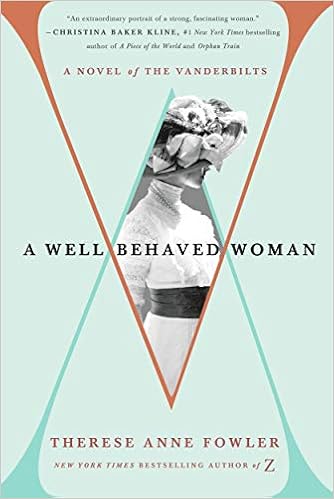
A Well-Behaved Woman by Therese Anne Fowler 


The wealth of the Vanderbilt family was astounding both in their day and by today’s standards, even if one never takes inflation into account. Back in the late 1800s, that should have meant something. However, all it meant was that they had mounds of money, because their family hadn’t lived in America enough generations for them to be accepted into New York’s high society. Alva Smith, on the other hand, had the appropriate lineage and standing, but her family’s fortune was ravaged by the Civil War and were on the brink of starvation. Although the subtitle of this book is “A Novel of the Vanderbilts” Fowler’s latest novel is really more Alva’s story than that of a whole family. 

I must state that the first thing I liked about this book is how Fowler paced this novel. Fowler starts out by describing how Alva succeeded in getting a marriage proposal out of William K. Vanderbilt (which felt a bit unlikely, but not impossible). Afterwards, she goes into their marriage and how Alva succeeded in wrangling the much-needed recognition of New York’s #1 socialite, Caroline Astor. That event – a costume ball – happens smack dab in the middle of this novel. This allowed Fowler to use the rest of the book to delve onto a large chunk of Alva’s life, which continues through to the early part of the 20th century. 

The way Fowler portrays Alva is very special indeed. On the one hand, as the story begins, we almost feel that Fowler feels sorry for Alva. As the years go by, we notice that there are many conflicting things about Alva, so that sometimes we believe that Fowler wasn’t all that pleased with the woman she was writing about. Fowler draws us a woman of great intelligence and inner strength, who also has a level of generosity, warmth and grace, making Alva into a force to be reckoned with. Fowler also allows us to see a side of Alva’s personality that is less than demure, who can also be self-centered, if not sometimes spoiled. With this, Fowler was able to assume certain things about Alva that history would never record, such as the passionate side of her personality (both physical and emotional), which she would have needed to keep repressed. Of course, this makes the title of the book a bit ironic, seeing as she didn’t always behave the way her world would have preferred. 

This means that by the time we get to the end of the book, we can see just how much Fowler fell in love with Alva, while allowing her readers to come to their own conclusions regarding her strengths and flaws. Fowler also imbues Alva with good measures of wit and cynicism, resulting in several instances of dialogue that made me laugh! Add to all of this a very honest, open and absorbing writing style, which despite the length of this work, grabbed me so fully that I can easily call this a real “page turner,” which is usually reserved for adventure and crime novels. 

That said, there were a few scenes that I would have cut out, or at least pared down, which might have added a touch more consistency and cohesion to this work, but I understand why they were left in, and they didn't disturb the flow of the narrative. In addition, there were times when I wondered if Fowler slightly misrepresented William Vanderbilt in her portrayal. It seemed to me that there was the potential for him to have been more loving of Alva, if she had just given him a chance. While this could have been on purpose (or historically accurate), it did make me think that Alva might have had a hand in her own unhappiness, and perhaps also in William’s infidelity. Finally, had hoped that Fowler would give us more of Alva’s later life, where her efforts to obtain women’s suffrage would be detailed, but the afterward and author’s notes made up for that in spades (and I request, nay demand, that you read every last well written word). 

I cannot add anything more to this review except my kudos to Fowler for painting such a three-dimensional portrait of Alva, who is ultimately human and truly realistic and whose many flaws did nothing to diminish her many admirable qualities. If this is the kind of women’s historical fiction you generally enjoy, I’m thinking that there are few, if any, better examples than this novel. This is why I’m wholeheartedly recommending this and giving it a full five out of five stars, since I honestly enjoyed every minute of reading this book. 


St. Martin's Press will release "A Well-Behaved Woman: A Novel of the Vanderbilts" by Therese Anne Fowler on October 16, 2018. This book is available (for pre-order) from Amazon, Barnes & Noble, Kobo Books, Kobo audio books, eBooks, iTunes (iBook or audiobook), The Book Depository (free worldwide delivery), new or used from Alibris or Better World Books as well as from an IndieBound store near you. I would like to thank the publishers for sending me an ARC of this novel via NetGalley.
reade more... Résuméabuiyad

Educating Harry

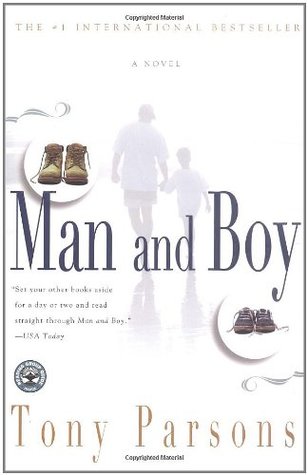
Man and Boy by Tony Parsons 


The blurb for this book on Goodreads says, “Harry Silver had it all: a beautiful wife, a wonderful son, a great job in the media. But in one night he throws it all away. Then Harry must start to learn what life and love are really all about.” So generally, I hate it when I read that a character “had it all” because we all know from this that something is going to go terribly wrong, and the book is going to be all about their struggle to recover from some tragedy that’s not really their fault. However, in this instance, we immediately see that he’s to blame for his own predicament, so I figured this one might be a little different. More importantly, I was looking for something that wouldn’t be as heavy as some of the other books I’d recently finished reading, and the blurbs on the cover did talk about this one being funny. That’s the main reason I decided to read this book. The question is, was it a good choice or not? 

The short answer to that question is both yes and no, and I’ll start with the latter. First of all, while there were some amusing passages that made me smile, and one or two that got a small giggle out of me, I can’t really say that it was hilarious or even all that funny. I’d say that better adjectives for this book would be sweet, as well as lighthearted. Other blurbs on this book said it was “tear-jerking” and one person said they “cried five times.” Well, while there were some less than happy parts in this book, I didn’t cry even once, and again, better adjectives would be tender and maybe touching. What I’m saying here is that if you’re looking for a rollercoaster of emotions, you won’t find it here. 

That said, there is much about this novel that is worthy of praise. To begin with, Parsons writes Harry Silver, the book’s protagonist, as a very sincere young man who makes one very stupid mistake that changes his whole life. Despite his indiscretion, we grow to really care about Harry, particularly since he makes such efforts to become a better person, as well as a better father to his young son. Mind you, women reading this book will be a touch annoyed that Harry doesn’t seem to get why his wife felt that his one-night stand was a deal breaker, or how quickly he seems to find another love interest. Even so, we like Harry, and we like how much he tries, and having a sympathetic protagonist is very important. Parsons also gives us a truly believable cast of characters that we can either fall in love with or dislike, but in most cases, it is the former, which also helps the novel. 

Furthermore, Parsons really has a lovely writing style. What we get here is something that feels very easy-going, very breezy and light, even when things aren’t going all that well for Harry. Parsons prose is also just carefully descriptive enough to paint pictures of both the places in Harry’s life, as well as the people he encounters along the way, without the narrative feeling stodgy or poetic. Where Parsons really shines, however, is in his dialog. Here we can listen to each character separately, and know almost immediately who is speaking. The talent that takes to make each character’s voice sound so distinctive is notably praiseworthy, and ultimately admirable. 

All told, Parsons’s sympathetic and believable characters, together with his clear, natural prose and sparking dialog, make for a very good read indeed. The question then is, does it matter that it isn’t highly emotional; should we care that we won’t have tears running down our faces with either laughter or in sadness? To tell the truth, if you ask me, no it doesn’t. This is a good book, and although it is nothing groundbreaking or spectacular, it is just the type of book that you might need after you’ve read something that wears you out emotionally. For that, I think it deserves a slightly better than average three and a half stars out of five. (By the way, this was the first in a series of three books.) 


"Man and Boy" by Tony Parsons is available from Amazon, Barnes & Noble, Kobo Books, Kobo audio books, eBooks.com, iTunes (iBook or audiobook, and the trilogy), The Book Depository (free worldwide delivery), new or used from Alibris or Better World Books (free worldwide delivery and supporting libraries and literacy) as well as from an IndieBound store near you.


reade more... Résuméabuiyad

Ghostly Blues

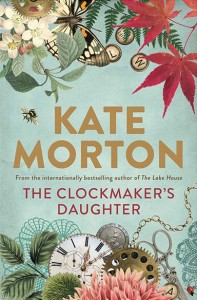
The Clockmaker’s Daughter by Kate Morton 


According to Goodreads, this book is “a story of murder, mystery, and thievery; of art, love and loss. And flowing through its pages like a river, is the voice of a woman who stands outside time, whose name has been forgotten by history, but who has watched it all unfold…” of course, the woman is refers to is the titular Clockmaker’s Daughter. However, her voice is hardly the only one we hear in this book, and the many other voices spread across time, beginning in the mid-1800s through the 21st century. 

This is actually the first Morton I’ve read, even though I know we have one or two of her novels on our shelves; I’ve simply never gotten around to reading any of them. This is obviously a hole in my literary education, because what I found here was quite unexpected on several levels. 

To begin with, I had no idea that Morton’s writing style was such that I would find the prose totally riveting, luscious, and appealing, while also being deceptively simple. This type of artistry is exactly what I love to find in these types of novels, particularly ones that are as epic as this one. To my mind, this is the type of writing that seems to lend itself especially well to the historical fiction genre. Of course, not every writer can achieve this level of allure in their writing, so I’m sorry I never read Morton before. 

I was also surprised about how little the inclusion of the unrealistic parts of the story bothered me with this novel. Most of my regular readers know that I don’t care much for fantasy books, and while I can handle a bit of magical realism here and there, I don’t generally go in for horror or ghost stories. However, despite finding a ghost early on in this book, once again, I was unwilling to quit reading this book because of the prominence of an apparition being a major protagonist here. Once again, Morton’s literary style eclipsed that prejudice in me, and yet again, that kept me reading. 

Another surprising element here is how Morton gives us such a wide-ranging cast of characters, not only from across the years, but also within each of the eras where the actions take place. Often something like this can be confusing, and I must admit that there were times when I wasn’t sure who was whom, or where these people fit into the story. In fact, putting the pieces of this puzzle together wasn’t easy at all, and Morton only starts fitting them together for the readers about three-quarters of the way through the book, with the real answers only coming very near the ending. This can be both a good and a bad thing. On the one hand, being overly confused might turn off some readers. On the other hand, this increases the mysterious aspects of the plot, and I pride myself in figuring out “who done it” far too early in many books, which is the reason I hardly read mystery novels anymore. In fact, the former is more often the case for me, but if you can keep me guessing about what really happened, then you’ve got me hooked. Of course, add that to such brilliant prose and I’m in seventh heaven. 

I should also mention that this is no small work of fiction, as it hovers around 600 pages, which is easily 15-20% longer than most of the books I read. Of course, as already noted, when a book is this well written, we don’t often pay that much attention to the length (and if you’ve got it on your eReader instead of holding it in your hands, that makes it all the less daunting to tackle). However, the exceedingly large confluence of characters, and the many eras that this book encompasses, despite their very valuable contributions to the plot, does force me to lower my rating of this book. I can still recommend this book warmly, especially to lovers of historical fiction, people with a good measure of patience, and people who like a good ghost story. I’m not necessarily all of those types of people, so I’m going to give it four out of five stars, almost solely because of the excellent writing. 


Atria Books released "The Clockmaker’s Daughter" by Kate Morton in the UK on September 20, 2018. The US release will take place on October 9, 2018. This book is available (for purchase in the UK, and for pre-order in the US) from Amazon, Barnes & Noble, Kobo eBooks, Kobo audio books, eBooks.com, iTunes (iBook (US), iBook (UK) or audiobook), The Book Depository (free worldwide delivery), new or used from Alibris or Better World Books as well as from an IndieBound store near you. I would like to thank the publishers for giving me an ARC of this novel via NetGalley.
reade more... Résuméabuiyad

Three Belles’ Secrets.

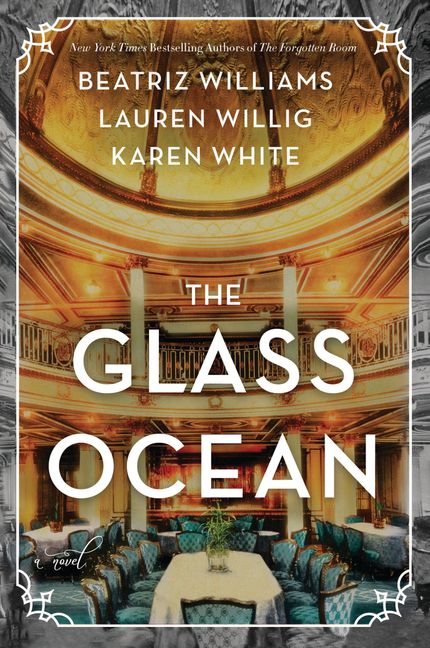
The Glass Ocean by Beatriz Williams, Lauren Willig, and Karen White. 


The sinking of the Lusitania by Germany was the tragic event that brought America into the first World War. In this novel, the three co-authors, look at that event through the eyes of three women, two of whom survived the disaster, and one woman, Sarah Blake, who looking into the past to find inspiration for her next book by hopefully uncovering the truth about her great-grandfather, who was a purser on the ship. The two passengers are Tessa Fairweather and Caroline Telfair Hochstetter, whose paths end up crossing despite their sailing on separate classes. Goodreads says “As the Lusitania steams toward its fate, three women work against time to unravel a plot that will change the course of their own lives . . . and history itself.” 

First, I want to apologize to Williams, Willig and White (who I will refer to as “Team W” from now on) for not publishing this review sooner (I hope will you forgive me since the delay was due to a vacation abroad that included research into my own historical fiction novel), but better late than never, right? That said, I’ve had quite a bit of time to think about this book, which further shaped my opinion, but not by much. To begin with, I immediately found that each of “Team W” are well adept in building fascinating, and highly sympathetic characters. If I had to rate them, I’d say I liked Tessa the best, and almost equally Sarah, with Caroline being my least favorite (but only by a whisper). 

I mention this because for me, often how authors portray characters can make or break a novel. In this instance, I am assuming that the three writers worked primarily on one character each, which not only gave each of the female protagonists their own perspective, but also their own distinct voices. Sarah, for instance, is the one looking back at the past, trying to uncover a mystery, that may or may not have some special connection to her own family. Her modern voice is bold and unguarded, but being a historian, she still has a nostalgic streak, which beautifully connects her to the past and both Tessa and Caroline. 

Since Tessa and Caroline are both from the historical parts of the story, their accounts are in “real time” but yet very different. Tessa’s lower-class status, allows her to be blunter than Caroline, without being rude (for the most part). She also has the type of wit and quick mind that assists her with her less than honest schemes, as well as hide her own emotions. As for Caroline, she isn’t your classic high-society woman. She’s passionate, intelligent, and forthright when the world around her prefers quiet, unassuming women who adorn the scenery and defer to their husbands. However, she is a woman who is torn between loving her husband, and falling for a man whose character more closely matches her own. 

With these women, and their individual love interests (and thankfully, the romance parts are not at all gratuitous, and they work well in furthering the plot), we have the mystery that connects them all. Team W artfully weaves the subterfuge and intrigue into the story, which they carefully unfold with just the right pacing, and switching between the past and the present, to keep our interest throughout. If I have one criticism of this book, it would be that there was an essential part of the plot from the opening of the book that never got satisfactorily resolved. Because of this, I felt that the ending was just a tiny bit disappointing, although still satisfying for the most part. Admittedly, because “Team W” did such a marvelous job describing the bombing of the ship and the panic that ensued, followed by the horrible aftermath with the survivors and the victims made for such an exciting climax that practically anything after that would naturally feel a touch lackluster by comparison. 

All told, “Team W” have given us a truly enthralling novel and their collaboration feels seamless, even though they must have worked almost equally apart, as they did together. By the way, I was already slightly familiar with two of the Ws here – Williams and Willig – since they both contributed to the short story collection "Fall of Poppies." When I saw their names on this book, I knew I had to read it, and now I also want to see what else White has written. As you can see, I truly enjoyed this book, I can warmly recommend it, and I believe it deserves a very healthy four and a half stars out of five. 


William Morrow - Harper Collins released “The Glass Ocean” by Beatriz Williams, Lauren Willig, and Karen White on September 4, 2018. This book is available from Amazon, Barnes & Noble, Kobo Books, Kobo audio books, eBooks.com, iTunes (iBook or audiobook), The Book Depository (free worldwide delivery), new or used from Alibris or Better World Books as well as from an IndieBound store near you. I would like to thank the publishers for sending me an ARC of this novel via Edelweiss in exchange for a fair review.
reade more... Résuméabuiyad

Female Confidential

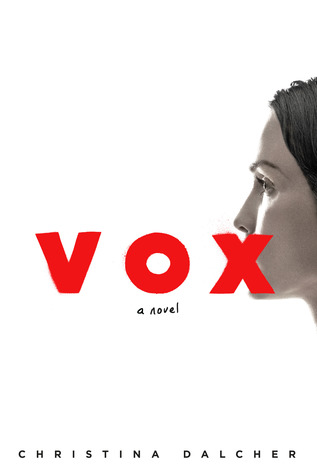
Vox: A Novel by Christina Dalcher. 


This novel is set in the not too distant future, where institutional misogyny has reached such heights that women are now totally out of the workforce and females are only allowed to speak 100 words a day (and no cheating with sign language, either). The new government has put wristbands that count every female’s words and if they go above their allotment, they get an electric shock that gets worse the more they speak. In this world we find Jean, a former scientist who was on the brink of curing aphasia, who is now relegated to her home, where she lives with her husband, three sons and her young daughter. However, when the president’s brother is in a skiing accident, with a brain injury that gives him the exact type of aphasia Jean had been trying to cure, the government calls on her to rejoin her old team and finish the job. But all is not what it seems in this dictatorial, woman hating world. (Thanks for the free book, @PRHGlobal/@prhinternational

If you’ve read or watched Margaret Atwood’s “The Handmaid’s Tale” you probably already know how far a vivid imagination can go to invent a society that treats their women horribly. But if Atwood’s Gilead wasn’t bad enough, Dalcher has concocted an even more disturbing scenario, where the government uses both science and technology to effectively shut up more than half the population, and thereby force all females into full submission, just “as God intended.” Furthermore, without the fears of civilization dying out due to drastically reduced reproduction rates, Dalcher leans the horrors of her dystopia fully on the aspects of “family values” and “purity.” This means things like teaching Christianity in schools, no homosexuality, no birth control, no promiscuity, no adultery, and much more. Thankfully, Dalcher doesn’t describe all the aspects of this society (for example, I wonder what they did with non-Christians and atheists), but there are more than enough hints to make everything feel quite gruesome. 

Since the comparison has already begun, I’ll continue by noting that the biggest difference between Atwood and Dalcher is that Atwood’s June/Offred is a quiet, if not morose rebel, who was invented at a time when social activism was somewhat on the quieter side compared to the turbulent 60s and 70s. Although the year isn’t specified in this book, Dalcher makes it clear that Jean is living in the immediate aftermath of the Obama era, just long enough afterwards to have witnessed the beginnings of the #MeToo movement and women’s marches, but with someone else in the White House. In Jean’s world, she remembers how she essentially ignored the protests, and the depths of the new administration’s evil forces, while disbelieving that her America could ever allow radical misogynists to wreak such levels of havoc on her gender. This makes Jean feel guilty about her previous inaction and Dalcher draws her as a sharply cynical woman, with a caustic sense of humor, who isn’t above swearing like a drunken sailor – which also makes her precisely the type of woman that these governmental measures are trying to end. It also makes Jean a far more conniving rebel than June/Offred, because Jean has just enough power to wield over these authorities to allow her to become an exception to their rules, at least temporarily. 

Dalcher takes this wily Jean, and builds the plot around her to take as much advantage of that short-lived exceptional status, which ends up giving us a plot that’s paced at breakneck speed, that should be the envy of any thriller novelist. Of course, Dalcher’s many twists only add to the suspense, which gets even more intriguing with the addition of (surprise) a touch of romance along the way. I know it’s a cliché, but this is a true page-turner, and even when I was appalled by some of the things that Dalcher describes here, like the proverbial car crash, I just couldn’t take my eyes away. Obviously, this novel is not for the faint of heart, but Dalcher’s injections of humor and sarcasm in her rapier wit prose helps it along. More importantly, these days, it probably should become required reading; because if reality is supposed to be stranger than fiction, I pray this book is a gigantic the exception to that rule! In short, I was totally blown away by this novel, and despite how distressing this book may seem, I have to give it a full five stars. 


Berkeley, an imprint of Penguin Random House, released "Vox: A Novel" by Christina Dalcher on August 15, 2018. This book is available from Amazon, Barnes & Noble, Kobo eBooks, Kobo audio books, eBooks, iTunes (iBook or audiobook), The Book Depository (free worldwide delivery), new or used from Alibris or Better World Books as well as from an IndieBound store near you. Thanks for the free book, @PRHGlobal/@prhinternational, and for sending me the ARC of this novel via NetGalley in exchange for a fair review.
reade more... Résuméabuiyad

A Village Education

The Bookshop by Penelope Fitzgerald 


It is 1959, and Florence Green is in Hardborough, a small seaside town in England’s East Anglia region, that doesn’t have its own book shop. This is something that Florence wants to fix. The only problem is, there seems to be some opposition to where she’s chosen to open it, the Old House. Although the building has stood empty for quite some time, there are people in town who have other ideas for that property. 

A couple of weeks ago, I went to see the movie adaptation of this novella, which I found totally charming. Since the generalization is that the book is better than the film, I decided to hunt down a copy of this book and find out for myself if this one obeyed that rule, is one of the few exceptions, or something in between. I have to warn my readers that because of the close proximity between seeing the movie and reading the book, this may end up being a review of both, with some compare and contrast slipped in, for better or worse. 

There is a whole lot of good things one can say about this book. First, Fitzgerald’s style is very fluid and smooth, and almost emotionless at times, but just when you thing that the atmosphere is feeling a touch too dry, Fitzgerald brings a little twist in to spice things up a bit, and whet your appetite for more. Fitzgerald also uses her sparse prose deftly to draw her characters with inference rather than lengthy descriptions. I have to say that the actors that appear in the movie fit very well with what Fitzgerald gives us here, and I had no problem with having their faces in my head while I read this book afterwards. 

It is important to note that most people would say that this novella isn’t technically historical fiction, because when Fitzgerald wrote this book in 1978, she set it less than 20 years in her own past. However, I still think of this as historical fiction, since the era of this book is over 50 years in the past. It therefore makes sense that the language that Fitzgerald uses here feels very correct for the era, which certainly adds to the atmosphere. 

Since this is a relatively short book, it is a touch more skeletal than the movie, as well as concentrating more on Florence than the minor characters, where the movie was able to flesh them out a bit more. I didn’t find this to be a problem at all, and in fact, I felt that the pieces that the movie included that weren’t in the book, were actually good additions that fit well with the overall story. In fact, I would go so far as to say that I the book felt a touch unfinished, or perhaps thinner because those supplemental parts in the film weren’t in the original novella. Even so, I felt that Fitzgerald had a very specific plot that she wanted to take Florence through, and that specificity worked well with both the economy of the prose as well as the narrow number of characters that peopled Fitzgerald’s fictional village. Again, Fitzgerald’s descriptions of this town were very minimalistic, and I felt that I was at an advantage for having seen the film, since that helped me easily able to fill in the blanks from the book. 

Overall, I have to say that I found this novella to be a warm, gentle and highly enjoyable read, and I actually believe that the movie version was easily equal to, if not the slightest bit better than the book. Mind you, I’m sure that those who read this book when it was first published (or not long afterwards) might disagree, or even dislike the film, but I gave the movie eight out of 10 stars on IMDb, and I think this book deserves a solid four out of five stars. 


“The Bookshop” by Penelope Fitzgerald (originally published in 1978) is available from Amazon, Barnes & Noble, Kobo Books, Kobo audio books, eBooks.com, iTunes (iBook or audiobook), The Book Depository (free worldwide delivery), new or used from Alibris or Better World Books (free worldwide delivery; promoting literacy and libraries) as well as from an IndieBound store near you. The film adaptation of this book starring Emily Mortimer, Bill Nighy and Patricia Clarksonwas released in the UK on June 29, 2018 and in the US on August 24, 2018.
reade more... Résuméabuiyad

Diving in together

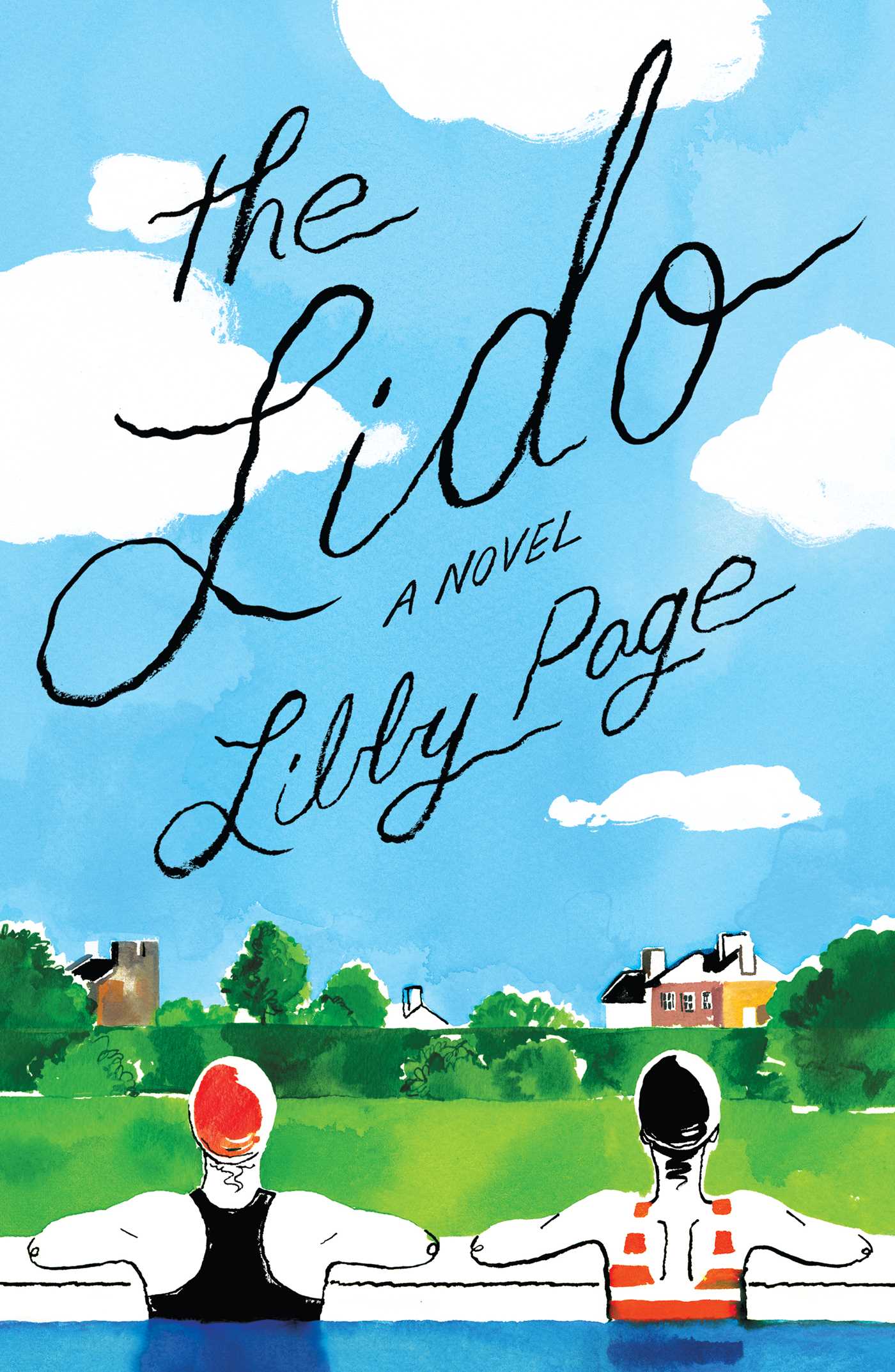
The Lido by Libby Page 


On Goodreads, the blurb for this novel says “Kate is a twenty-six-year-old riddled with anxiety and panic attacks who works for a local paper in Brixton, London, covering forgettably small stories. When she’s assigned to write about the closing of the local lido (an outdoor pool and recreation center), she meets Rosemary, an eighty-six-year-old widow who has swum at the lido daily since it opened its doors when she was a child. It was here Rosemary fell in love with her husband, George; here that she’s found communion during her marriage and since George’s death. The lido has been a cornerstone in nearly every part of Rosemary’s life.” This is a very good summary of this book, although it wasn’t evident to me that Rosemary had been swimming at the Lido “since it opened its doors” but that’s a minor point. 

Goodreads also calls this book “A tender, joyous debut novel about a cub reporter and her eighty-six-year-old subject—and the unlikely and life-changing friendship that develops between them.” While I can agree with almost all of this, there’s more. From my viewpoint, over and above this, Page also gives us portraits of two very different women, that also have much in common. Furthermore, Page also shows us how, through their serendipitous connection, these two women become more than they were before the two met; in other words, this is also a dual coming of age novel. 

Also, while this book will make you smile – and often, in fact – I’m not sure that “joyous” is the word that I would have chosen to apply to this novel. Yes, there are some very delightful parts of this story, but I felt that the overall atmosphere of the book was more a mixture of emotions, not all of them positive. For example, there’s a good deal of quiet resignation that runs throughout most of this story, which tends to color the mood of a majority of this story in a slightly grayish light (both because of and despite the famous English weather). This isn’t to say that the book is depressing, but rather that there’s a somewhat poignant undertone to most of the narrative. 

What brightens this book up the most is the quiet grace and subtle optimism that Page imbues in Rosemary, who we can both adore and admire. While Kate never fully succeeds in emulating this by the end of this novel, Page makes us believe that Kate may eventually achieve this, even if that’s not actually spelled out in the story. The ability of an author to do this – assist the readers in imagining what happens after the last page – is something I truly appreciate, and for a debut novel, this is quite an achievement, so kudos to Page for that. Moreover, Page did a really lovely job with building up the minor characters, and avoiding any obvious pitfalls when it came to the romantic interest for Kate. 

Together with this, Page also developed a very appealing plot, which allowed her to pull both Kate and Rosemary together along with all her other characters on a very interesting ride with the common goal of a community trying to save their beloved Lido. Between those parts of the story, Page also mingled in an excellent balance of the overview of Rosemary’s history with the Lido, which paralleled her lifelong love of her husband, George. 

As you can see, there is a whole lot to praise about this novel. However, there were a couple of things that didn’t sit completely right with me. One of these was the chapters in the book that described this fox that wanders the neighborhood. While I can understand why Page put these in the book, and I’m thankful she didn’t write them from the fox’s perspective, I felt that they didn’t really add all that much to the story. If it had been my novel, I probably would have left them out. The other thing that wasn’t quite right for me, were a couple of short chapters at the end of the novel, which gave the reader a touch too much information for my taste. Even so, Page is a very talented writer, with a lovely imagination and a true penchant for both character and plot development. That’s why I can recommend this book with a very strong four out of five stars. 


Simon & Schuster and Orion released "The Lido" by Libby Page on July 10, 2018. This book is available from Amazon, Barnes & Noble, Kobo eBooks, Kobo audio books, eBooks.com, iTunes (iBook or audiobook), The Book Depository (free worldwide delivery), new or used from Alibris or Better World Books (to support libraries and literacy, free worldwide delivery) as well as from an IndieBound store near you. I would like to thank the publishers for inviting me to read an ARC of this novel via NetGalley in exchange for a fair review.


reade more... Résuméabuiyad

Continuing to be

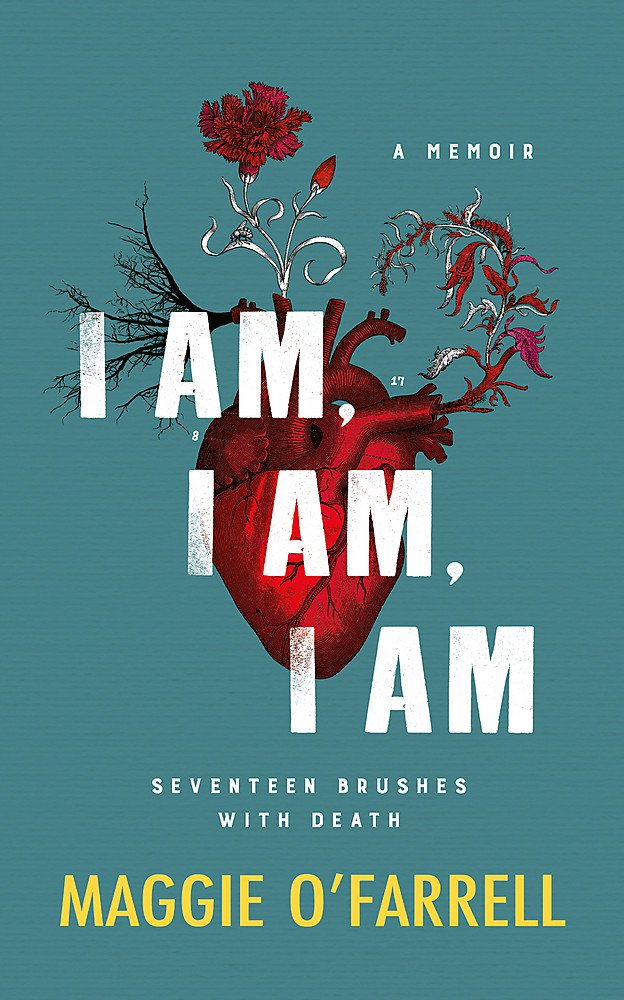
I am, I am, I am: Seventeen Brushes with Death by Maggie O’Farrell 


Goodreads calls this book a “memoire with a difference - the unputdownable story of an extraordinary woman's life in near-death experiences.” They also say it is “Shocking, electric, unforgettable,” and comment that “It is a book to make you question yourself. What would you do if your life was in danger, and what would you stand to lose?” Well, I couldn’t agree more with this summary, but to be honest, I think it is even more than that. 

My regular readers will know that I don’t usually read non-fiction, but this is Maggie O’Farrell, and well, I’ve been in love with her writing for years. Plus, the title indicated that this wasn’t an autobiography so much as a collection of experiences, which is far more to my taste. That is why the opportunity to get a glimpse into her life, even if it isn’t about the lighter side of her world, was irresistible to me, despite my worry that this might be heavy going. Thankfully, even though some (if not all) of these experiences were obviously traumatic in one way or another, somehow O’Farrell was able to portray them in a way that stuns us, yet never repulses us. 

However, don’t let this make you think this book is like the proverbial “train wreck” or “car crash;” one that you know is going to be morbid or gory but you can’t seem to tear yourself away, even if it feels like you should. This is because O’Farrell deftly side-steps anything that borders on the grisly through her writing style, which is so graceful, so lyrically poetic that even the most difficult scenes become a platform for her thoughtful, and deep sensitivity combined with her own an elevated sense of self-understanding. After writing that, it occurred to me that O’Farrell might disagree with that last part and argue that exact opposite is true. However, I can assure you it was highly evident to me, as if writing these stories was her way of writing a real-life coming-of-age story. 

What also struck me about this book was the artistry of how O’Farrell put all these stories together. These vignettes aren’t in chronological order, but rather in what feels like level of severity of the closeness of death. For example, in the first story, O’Farrell’s brush with death only becomes evident in hindsight, days after the incident occurred. Each subsequent story describes a situation where the nearness of the various dangers gets increasingly closer to ending O’Farrell’s life. The last story, however, takes a slightly different approach, and the life that was in danger described there, isn’t her own (I won’t say more, to avoid spoilers). If it sounds like an oxymoron that a review of a non-fiction memoir has spoilers, I can assure you that in this case, it certainly could! 

Finally, I have to say that there was also no small amount of creativity with the construction of the stories themselves. O’Farrell allows herself to flit between the incident in question and pieces from things that happened both prior to and long after the events, including present day observations and interpretations of the situations that O’Farrell could only make after having time for reflection. Add to this O’Farrell’s obviously deep emotional connections to all these stories, which bring forth a wellspring of prose that is at turns elegiac, whimsical, heartbreaking and uplifting, but never morbid or maudlin, and you have a true masterpiece. I cannot praise this book enough, and I would recommend this book to anyone who has the need for some honest inspiration in their lives (and these days, who doesn’t), so I’m giving it a full five stars. 


Tinder Press first released "I am, I am, I am: Seventeen Brushes with Death" by Maggie O’Farrell on August 22, 2017. This book is available from Amazon, Barnes & Noble, Kobo Books, Kobo audio books, eBooks.com, iTunes (iBook or audiobook), The Book Depository (free worldwide delivery), new or used from Alibris or Better World Books as well as from an IndieBound store near you.

My reviews of Maggie O'Farrell's novels can be found here:
After You'd Gone
My Lover's Lover
The Distance Between Us
The Vanishing Act of Esme Lennox
The Hand that First Held Mine
Instructions for a Heatwave
This Must be the Place


reade more... Résuméabuiyad

Bottling their History

The Lost Vintage by Ann Mah 


Kate knows that if she’s ever going to pass the Masters of Wine test, she’ll have to learn much more about French wines, particularly the ones from Burgundy. To do that, she’ll decides it’s time to go back to France, where her family’s ancient vineyards are nestled in that part of the country. While helping with the harvest, her cousin’s wife asks Kate to help her clean out the old “cave” in the hopes of maybe using the space for a part of a future B&B. That’s when they discover, behind an old armoire, a part of the cave that’s been hidden since WWII, and what it holds will surprise everyone. 

I first became familiar Mah’s writing four years ago, when I read her non-fiction work “Mastering the Art of French Eating.” So, when I saw this novel available on Edelweiss, I decided to give her fiction a try. Since I already knew of her love of France, I was certain that a novel set there would be interesting, and I wasn’t wrong. What Mah brings us is a story that brings the past and the present together with a big mystery and a touch of romance. But don’t get me wrong, this isn’t a romance novel, although the connection between Kate and Jean-Luc does play into the story. 

However, the thing that is more central to the plot is that mysterious “cave,” its contents and how these two things connect to a family member from the past – Helene – who no one seems to know anything about. Mah decided to give the readers more insight into Helene than the modern-day characters by inserting passages from Helene’s journal as breaks from the contemporary sections of the story. I liked the idea of knowing more than what these people knew, which added to the suspense, turning it into a motivating factor for my wanting to read on so I could learn how it all works out. 

The other compelling aspect of this novel was Kate herself, and how Mah pitted her desire to become a Wine Master and further her career against the draw of Burgundy France and her own heritage, even if her family might have had some skeletons hidden in the closet (or as this case may be, behind an armoire). Mah’s inclusion the neighboring vineyard’s Jean-Luc into this mix, puts yet another angle on Kate's struggles. On the one hand, Kate recalls some of his less than stellar qualities from his youth, while on the other hand, she is reminded of what she might have missed out on, when she left him behind to return to California. 

Mah also does an excellent job of developing highly sympathetic characters. We immediately like Kate, and that makes us invested in wanting to see her succeed. At first, we are more concerned about her passing that Test, but later that becomes almost secondary to hoping she’ll find the answers to the many questions that the cave presents. The same goes for Helene and her story, where we can only feel for a young woman who is struggling with trying to survive the war and the Nazi occupation of her home country. Mah’s minor characters also fit carefully around these two protagonists, while they also help further the plot. I particularly liked how Mah brought two people into the contemporary story who both seem like suspicious people, which also mirrored one less than savory person in Helene’s world. 

That said, I’m afraid I can’t give this book a full five stars, simply because I found the ending to be somewhat trite, for lack of a better word. Mind you, Mah had me hooked through most of the book and I was very pleased with how Mah handled the outcome of the romantic aspect of Kates dilemma, but the conclusion regarding the titular wines fell just short of being satisfactory. I also felt that how Mah handled the ending of Helene’s story felt a bit awkward, and just a touch too convenient for my taste. As usual, I am always aware that the level of satisfaction regarding how an author handles the endings to their stories can be a very personal thing. I will still warmly recommend this book for lovers of both historical and contemporary fiction, and especially to those who like a bit of romance with a touch of mystery and give it a healthy four out of five stars. 


William Morrow - Harper Collins released "The Lost Vintage" by Ann Mah on June 18, 2018. This book is available from Amazon, Barnes & Noble, Kobo eBooks, Kobo audio books, eBooks.com, iTunes (iBook or audiobook), The Book Depository (free worldwide delivery), new or used from Alibris or Better World Books as well as from an IndieBound store near you. I would like to thank the publishers for sending me an ARC of this novel via Edelweiss in exchange for a fair review.
reade more... Résuméabuiyad

Theatrical Turbulence

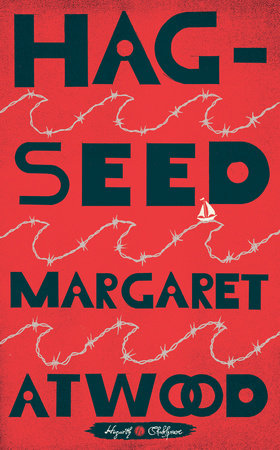
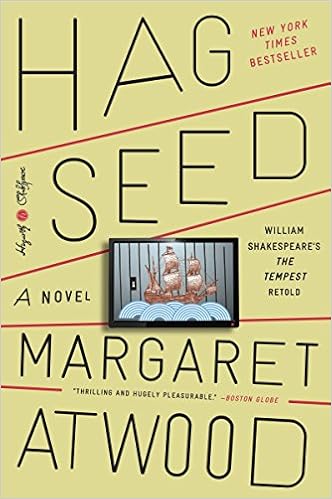
Hag-Seed by Margaret Atwood. 


It was Felix’s dream to mount his own version of Shakespeare’s play “The Tempest” at the  (Canadian) Makeshiweg Theater festival, but before he could get started, he found himself ousted as their artistic director. That was the last blow, since came on the heels of a broken marriage, and even worse, the death of his adored three-year-old daughter Miranda. With this, Felix goes underground, only to emerge 12 years later as “Mr. Duke” who is running an educational program in theater at a local prison. When he finds out that the people who forced him out of Makeshiweg are coming to see what this course is about (with the obvious intention to shut the program down), Felix decides it is time to not only finally mount his “Tempest” but take his revenge at the same time.

This is another one of the novels commissioned in 2016 by the Hogarth Press to commemorate the 400th anniversary of Shakespeare’s death. My regular readers will recall that I read Anne Tyler’s retelling of “The Taming of the Shrew” in her novel “Vinegar Girl” which was, in my opinion, not as successful as it could have been (compared to other modernized versions). By taking on “The Tempest” Atwood brings to the fore a Shakespearean play that is probably one of his most complex and curious. A quick search found several instances of attempts to modernize of this play, but none of them did what Atwood does here; to place a production of the real Shakespeare play at the center of the novel. 

This is a truly unique approach, which has some basis in how the main protagonist of the play, Prospero, breaks the fourth wall, and speaks with the audience about his own fate after the play ends, thereby making all that came before that into a play within a play. Atwood goes even further in mirroring the play here. For example, Felix essentially disappears for 12 years after losing his job and daughter in close succession; in the play, the exiled Prospero and his daughter Miranda spent 12 years in an island cave. Felix’s adversaries stumble upon the program in the prison, not knowing their old adversary is running it; in the play, Prospero’s old enemies end up shipwrecked on his island. This is only a small selection of how Atwood blends the play into Felix’s life while at the same time Felix is working on putting on that same play. 

If I add here that this is only scratching the surface of this book, you might think that it is too convoluted, but that’s where you’d be wrong. What Atwood has done here is give us a multi-layered work that delves into a variety of aspects of this play and connects them to the types of utterly common human qualities that we’ve all noticed or experienced in our own lives, and even find in our own personalities. Atwood does this with a perfectly straight-forward narrative that brings clarity to the plot of the play as well as insights into the motivations and actions of all various characters – both from the play and in the novel. Furthermore, the method that Felix (aka Mr. Duke) uses to teach this play to the inmates is not only illuminating, but also a whole lot of fun, particularly because they can only use Shakespearian swear words! 

As you can probably tell, I adored reading every word of this book. Not only did I learn far more about this play than I knew before, but I also found myself once again fascinated by how Atwood can take an intricate plot (both in the play and in the story) and bring it together with such precision. There’s nothing about this book that could make me reduce my rating by even a quarter of a star, so I’m warmly recommending it with, as Felix says “full marks.” 


“Hag-Seed” by Margaret Atwood is available from Amazon, Barnes & Noble, Kobo Books, Kobo audio books, eBooks.com, iTunes (iBook or audiobook), The Book Depository (free worldwide delivery), new or used from Alibris or Better World Books (free worldwide shipping and supporting worldwide literacy) as well as from an IndieBound store near you.

reade more... Résuméabuiyad