Pages

.

Bottling their History

The Lost Vintage by Ann Mah 


Kate knows that if she’s ever going to pass the Masters of Wine test, she’ll have to learn much more about French wines, particularly the ones from Burgundy. To do that, she’ll decides it’s time to go back to France, where her family’s ancient vineyards are nestled in that part of the country. While helping with the harvest, her cousin’s wife asks Kate to help her clean out the old “cave” in the hopes of maybe using the space for a part of a future B&B. That’s when they discover, behind an old armoire, a part of the cave that’s been hidden since WWII, and what it holds will surprise everyone. 

I first became familiar Mah’s writing four years ago, when I read her non-fiction work “Mastering the Art of French Eating.” So, when I saw this novel available on Edelweiss, I decided to give her fiction a try. Since I already knew of her love of France, I was certain that a novel set there would be interesting, and I wasn’t wrong. What Mah brings us is a story that brings the past and the present together with a big mystery and a touch of romance. But don’t get me wrong, this isn’t a romance novel, although the connection between Kate and Jean-Luc does play into the story. 

However, the thing that is more central to the plot is that mysterious “cave,” its contents and how these two things connect to a family member from the past – Helene – who no one seems to know anything about. Mah decided to give the readers more insight into Helene than the modern-day characters by inserting passages from Helene’s journal as breaks from the contemporary sections of the story. I liked the idea of knowing more than what these people knew, which added to the suspense, turning it into a motivating factor for my wanting to read on so I could learn how it all works out. 

The other compelling aspect of this novel was Kate herself, and how Mah pitted her desire to become a Wine Master and further her career against the draw of Burgundy France and her own heritage, even if her family might have had some skeletons hidden in the closet (or as this case may be, behind an armoire). Mah’s inclusion the neighboring vineyard’s Jean-Luc into this mix, puts yet another angle on Kate's struggles. On the one hand, Kate recalls some of his less than stellar qualities from his youth, while on the other hand, she is reminded of what she might have missed out on, when she left him behind to return to California. 

Mah also does an excellent job of developing highly sympathetic characters. We immediately like Kate, and that makes us invested in wanting to see her succeed. At first, we are more concerned about her passing that Test, but later that becomes almost secondary to hoping she’ll find the answers to the many questions that the cave presents. The same goes for Helene and her story, where we can only feel for a young woman who is struggling with trying to survive the war and the Nazi occupation of her home country. Mah’s minor characters also fit carefully around these two protagonists, while they also help further the plot. I particularly liked how Mah brought two people into the contemporary story who both seem like suspicious people, which also mirrored one less than savory person in Helene’s world. 

That said, I’m afraid I can’t give this book a full five stars, simply because I found the ending to be somewhat trite, for lack of a better word. Mind you, Mah had me hooked through most of the book and I was very pleased with how Mah handled the outcome of the romantic aspect of Kates dilemma, but the conclusion regarding the titular wines fell just short of being satisfactory. I also felt that how Mah handled the ending of Helene’s story felt a bit awkward, and just a touch too convenient for my taste. As usual, I am always aware that the level of satisfaction regarding how an author handles the endings to their stories can be a very personal thing. I will still warmly recommend this book for lovers of both historical and contemporary fiction, and especially to those who like a bit of romance with a touch of mystery and give it a healthy four out of five stars. 


William Morrow - Harper Collins released "The Lost Vintage" by Ann Mah on June 18, 2018. This book is available from Amazon, Barnes & Noble, Kobo eBooks, Kobo audio books, eBooks.com, iTunes (iBook or audiobook), The Book Depository (free worldwide delivery), new or used from Alibris or Better World Books as well as from an IndieBound store near you. I would like to thank the publishers for sending me an ARC of this novel via Edelweiss in exchange for a fair review.
reade more... Résuméabuiyad

Theatrical Turbulence

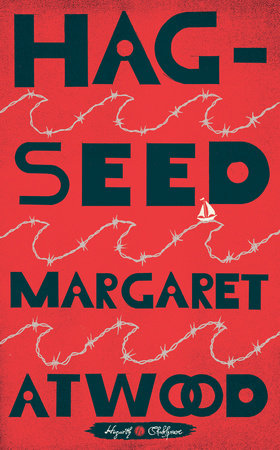
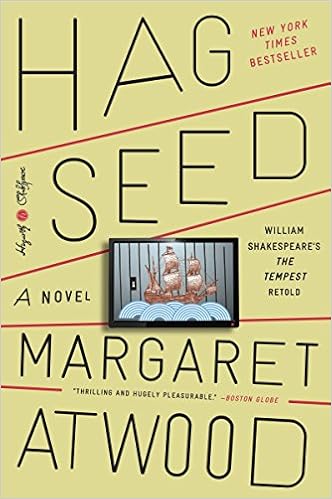
Hag-Seed by Margaret Atwood. 


It was Felix’s dream to mount his own version of Shakespeare’s play “The Tempest” at the  (Canadian) Makeshiweg Theater festival, but before he could get started, he found himself ousted as their artistic director. That was the last blow, since came on the heels of a broken marriage, and even worse, the death of his adored three-year-old daughter Miranda. With this, Felix goes underground, only to emerge 12 years later as “Mr. Duke” who is running an educational program in theater at a local prison. When he finds out that the people who forced him out of Makeshiweg are coming to see what this course is about (with the obvious intention to shut the program down), Felix decides it is time to not only finally mount his “Tempest” but take his revenge at the same time.

This is another one of the novels commissioned in 2016 by the Hogarth Press to commemorate the 400th anniversary of Shakespeare’s death. My regular readers will recall that I read Anne Tyler’s retelling of “The Taming of the Shrew” in her novel “Vinegar Girl” which was, in my opinion, not as successful as it could have been (compared to other modernized versions). By taking on “The Tempest” Atwood brings to the fore a Shakespearean play that is probably one of his most complex and curious. A quick search found several instances of attempts to modernize of this play, but none of them did what Atwood does here; to place a production of the real Shakespeare play at the center of the novel. 

This is a truly unique approach, which has some basis in how the main protagonist of the play, Prospero, breaks the fourth wall, and speaks with the audience about his own fate after the play ends, thereby making all that came before that into a play within a play. Atwood goes even further in mirroring the play here. For example, Felix essentially disappears for 12 years after losing his job and daughter in close succession; in the play, the exiled Prospero and his daughter Miranda spent 12 years in an island cave. Felix’s adversaries stumble upon the program in the prison, not knowing their old adversary is running it; in the play, Prospero’s old enemies end up shipwrecked on his island. This is only a small selection of how Atwood blends the play into Felix’s life while at the same time Felix is working on putting on that same play. 

If I add here that this is only scratching the surface of this book, you might think that it is too convoluted, but that’s where you’d be wrong. What Atwood has done here is give us a multi-layered work that delves into a variety of aspects of this play and connects them to the types of utterly common human qualities that we’ve all noticed or experienced in our own lives, and even find in our own personalities. Atwood does this with a perfectly straight-forward narrative that brings clarity to the plot of the play as well as insights into the motivations and actions of all various characters – both from the play and in the novel. Furthermore, the method that Felix (aka Mr. Duke) uses to teach this play to the inmates is not only illuminating, but also a whole lot of fun, particularly because they can only use Shakespearian swear words! 

As you can probably tell, I adored reading every word of this book. Not only did I learn far more about this play than I knew before, but I also found myself once again fascinated by how Atwood can take an intricate plot (both in the play and in the story) and bring it together with such precision. There’s nothing about this book that could make me reduce my rating by even a quarter of a star, so I’m warmly recommending it with, as Felix says “full marks.” 


“Hag-Seed” by Margaret Atwood is available from Amazon, Barnes & Noble, Kobo Books, Kobo audio books, eBooks.com, iTunes (iBook or audiobook), The Book Depository (free worldwide delivery), new or used from Alibris or Better World Books (free worldwide shipping and supporting worldwide literacy) as well as from an IndieBound store near you.

reade more... Résuméabuiyad

Finding her Time

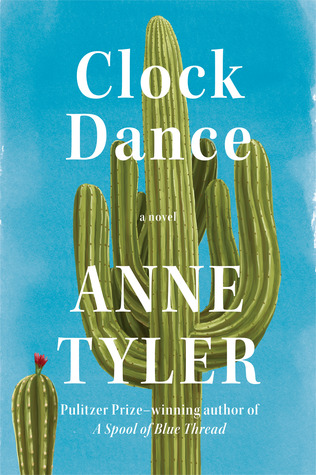
Clock Dance by Anne Tyler 


Willa’s life hasn’t been extraordinary, but it also hasn’t been uneventful either. When she was 11, her mother’s sudden, but thankfully temporary disappearance, was an experience marked Willa’s young life. When she was in college, she married her sweetheart and abandoned her education to raise a family. When she was only 41, her husband died in a tragic car accident. Now, 20 years later, one phone call from a total stranger is about to change Willa’s life once again. 
(Thanks for the free book, @PRHGlobal/@prhinternational)

Once again, Anne Tyler brings us a late-stage, coming-of-age story of a woman who you might have seen dozens of time on the street, but who you might never strike up a conversation with, and more the pity. Because if you did get to know her, maybe she might be very different than you might have thought. What Tyler likes to do in her novels is draw people who surprise us, and sometimes themselves along the way. In fact, although Willa is the center of attention here, almost all of Tyler’s characters in this novel start out to be seemingly one thing and then, turn towards being something else. Yes, there are some more predictable characters here, such as Willa’s second husband, who never seems to stray from being self-centered; but in general, most of Tyler’s characters have a tendency to do unlikely things, and at the most unexpected times. 


This is one of the attractions of Tyler’s books, and while we’ve come to expect this from these novels, Tyler succeeds in keeping from falling into any type of formula in her books. This is a good thing, because formulaic novels can be boring. Yes, they say that there are only a couple handfuls of essential plots in the world, but if an author can find a way to frame their stories to include some type of twist, they will continue to entice readers to grab their next work. For example, in Tyler’s 2015 novel “A Spool of Blue Thread,” she tells the story backwards, starting from the most contemporary part, and then moving backwards in time (until Tyler decided she’d gone far enough). Here, the three short pieces of Willa’s earlier life – at age 11, at age 21 and once again at age 41 – leave many gaps in her narrative when the story jumps to Willa aged 61. This, of course, was one of the major points of this novel. That being, that you never know which of the things you experience during your younger days will be the ones that end up shaping your later life. The other major point of this novel is that you may have taken the wrong thing away from any or all those formative experiences, but it’s never too late to realize the lessons you learned back then, might have been the wrong one. 

Another thing that I always enjoy in Tyler’s novels is her very open and straight-forward prose style. It always feels like I’m listening to a friend tell me a story, it feels that welcoming and honest. While Tyler’s prose may feel simple on the surface, that friendly feeling is also underlaid with just enough of a poetic touch to make things feel alive and colorful. Add to this the way Tyler uses her language to set the atmosphere in her novels, and you have a winning combination. Mind you, Tyler’s stories aren’t always up-beat and this one has a somewhat gray tone to it that seems to prevail. It is almost like Willa is living in a type of fog, but as the story progresses, that fog starts to clear, leading up to a very concise ending that allows the reader to imagine what will happen to Willa and the other characters after the last page, which is exactly the way I like novels to end. 

I should add here that even with all this praise, I didn’t find this novel to be as rich as her last one, “A Spool of Blue Thread.” As mentioned above, before we get to the main story of Willa at age 61, there are the three snippets from her past. These were wonderful but, I think she should have given us a little bit more of that, maybe even just one more to introduce us to her second husband, so we could understand better her later relationship with her sons. Also, perhaps in lieu of another snippet (or in addition to one), she could have done a bit more to developed the metaphor of the Saguaro cactus that appears on some of the covers. That said, who can resist sitting down with an old friend and hearing a captivating story that's both delightfully told and heartwarming? That's why I still can very warmly recommend this novel and give it four and a half stars out of five. 


Penguin Random House (Knopf Doubleday Publishing Group) released "Clock Dance" by Anne Tyler on July 10, 2018. This book is available from Amazon, Barnes & Noble, Kobo Books, Kobo audio books, eBooks.com, iTunes (iBook or audiobook), The Book Depository (free worldwide delivery), new or used from Alibris or Better World Books as well as from an IndieBound store near you. I would like to thank the publishers for inviting me to read an ARC of this novel via NetGalley in exchange for a fair review.
reade more... Résuméabuiyad

An Eve or a Lilith?

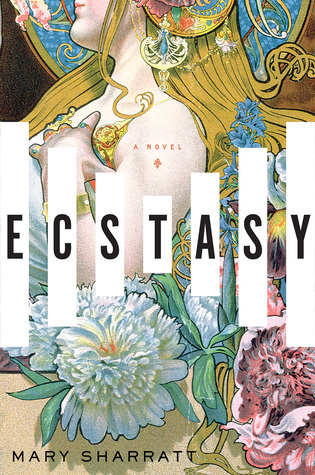
Ecstasy: A Novel of Alma Mahler by Mary Sharratt 


Part of the blurb for this book on Goodreads says “Coming of age in the midst of a creative and cultural whirlwind, young, beautiful Alma Schindler yearns to make her mark as a composer. A brand-new era of possibility for women is dawning and she is determined to make the most of it. But Alma loses her heart to the great composer Gustav Mahler, nearly twenty years her senior. He demands that she give up her music as a condition for their marriage. Torn by her love and in awe of his genius, how will she remain true to herself and her artistic passion?” 

This book sounds exactly like what I look for in historical fiction novels; a story about a lesser known (or unknown) woman in the life of a very famous man. Admittedly, I’m not a huge fan of Mahler’s music, but some of the other blurbs I read about this book mentioned one of my favorite artists, Gustav Klimt. Since I didn’t know anything about Alma, the idea of reading about someone who was being hyped as one of his muses, was intriguing. What I found with this book, however, wasn’t exactly that, but it did tick many of my boxes. 

What I did get here was a luscious portrait of a very conflicted woman; a woman who might have become world famous, had she been born during another era. This goes directly to the title of this review, since Sharratt portrays Alma as a woman who struggles with two sides of her personality. One being the virginal, self-sacrificing beauty and the other the passionate, selfish vixen. Sharratt even uses this same analogy when giving Alma voice to her inner troubles, as she depicts Alma as a woman desperately in love with her husband, who is at the same time distraught by the suppression of her own creativity. What makes this even more poignant is how Sharratt shows how any one of the other men in Alma’s life who were more than willing to marry her, might have allowed her to continue to compose after their marriage. That type of male dominance over wives that was the norm at the time in Europe, was already beginning to wane, but sadly not soon enough for Alma. 

While the major focus of this novel is Alma, no small amount is devoted to Mahler as well. Of course, it would have been impossible to write about Alma and ignore her husband’s world-renowned fame or his equally public infamy. What I didn’t know about Mahler was his amazing skills as a conductor, which it seems was as enormous as his ego as well as his ability to terrorize his orchestras and artists. The latter, while probably partially fictionalized by Sharratt, makes perfect sense considering his treatment of his wife, who he obviously adored, but frequently misunderstood. This also fits perfectly with his wanting Alma to give up composing as a condition for her marrying him. That, combined with Alma’s adoration for Mahler, set up the very realistic conflict that Sharratt placed at the heart of this fictional story, allowing for the deluge of emotional tsunamis that fill practically every page. 

All of this left me somewhat exhausted by the end of this book, which made me wonder if Sharratt didn’t go a touch overboard with including so much of this mutually obsession-filled marriage in such careful detail. In addition, after reading her afterward that included further factual details about Alma’s life after the death of Mahler, I realized I would have preferred less aspects of the story about their life together so that we could have learned more about what happened to her later in her life. This was the same problem I had with the novel I, Eliza Hamilton. Yes, it is great to have such a comprehensive story about that part of Alma’s life, but he died in 1911 and she lived until 1964! Ignoring a full 54 years, many of which sound tumultuous, affords us a very narrow view of who Alma really was, even if these were her formative years. 

I should mention that I received a copy of Sharratt’s 2016 novel “The Dark Lady’s Mask,” which impressed me regarding her writing ability, but I unfortunately could not finish reading it, mostly because of the literary licenses she took regarding Shakespeare, which were either far-fetched theories or pieces of essential information that were easily proven very wrong indeed. Sharratt seems to stray less from the facts here, which is enhanced by her inviting writing style that blends perfectly with the era. However, I cannot ignore my feeling that I only got half of the story I was hoping to read, nor the fact that Klimt was included in the hype for this book (and the obvious inspiration for the beautiful book cover) but ended up as barely a blip on this novel’s radar. For this all, I think I’ll still recommend this book, but I can’t give it more than three and a half stars out of five. 


Houghton Mifflin Harcourt released "Ecstasy" by Mary Sharratt on April 10, 2018. This book is available from Amazon, Barnes & Noble, Kobo Books, Kobo audiobooks, eBooks.com, iTunes (iBook or audiobook), The Book Depository (free worldwide delivery), new or used from Alibris or Better World Books (free worldwide delivery and supporting libraries and literacy) as well as from an IndieBound store near you. I would like to thank the publishers for sending me an ARC of this novel via NetGalley in exchange for a fair review.
reade more... Résuméabuiyad