Pages

.

Female Confidential

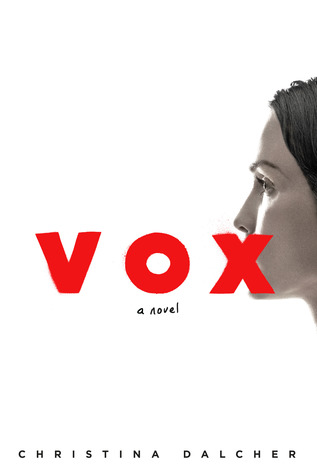
Vox: A Novel by Christina Dalcher. 


This novel is set in the not too distant future, where institutional misogyny has reached such heights that women are now totally out of the workforce and females are only allowed to speak 100 words a day (and no cheating with sign language, either). The new government has put wristbands that count every female’s words and if they go above their allotment, they get an electric shock that gets worse the more they speak. In this world we find Jean, a former scientist who was on the brink of curing aphasia, who is now relegated to her home, where she lives with her husband, three sons and her young daughter. However, when the president’s brother is in a skiing accident, with a brain injury that gives him the exact type of aphasia Jean had been trying to cure, the government calls on her to rejoin her old team and finish the job. But all is not what it seems in this dictatorial, woman hating world. (Thanks for the free book, @PRHGlobal/@prhinternational

If you’ve read or watched Margaret Atwood’s “The Handmaid’s Tale” you probably already know how far a vivid imagination can go to invent a society that treats their women horribly. But if Atwood’s Gilead wasn’t bad enough, Dalcher has concocted an even more disturbing scenario, where the government uses both science and technology to effectively shut up more than half the population, and thereby force all females into full submission, just “as God intended.” Furthermore, without the fears of civilization dying out due to drastically reduced reproduction rates, Dalcher leans the horrors of her dystopia fully on the aspects of “family values” and “purity.” This means things like teaching Christianity in schools, no homosexuality, no birth control, no promiscuity, no adultery, and much more. Thankfully, Dalcher doesn’t describe all the aspects of this society (for example, I wonder what they did with non-Christians and atheists), but there are more than enough hints to make everything feel quite gruesome. 

Since the comparison has already begun, I’ll continue by noting that the biggest difference between Atwood and Dalcher is that Atwood’s June/Offred is a quiet, if not morose rebel, who was invented at a time when social activism was somewhat on the quieter side compared to the turbulent 60s and 70s. Although the year isn’t specified in this book, Dalcher makes it clear that Jean is living in the immediate aftermath of the Obama era, just long enough afterwards to have witnessed the beginnings of the #MeToo movement and women’s marches, but with someone else in the White House. In Jean’s world, she remembers how she essentially ignored the protests, and the depths of the new administration’s evil forces, while disbelieving that her America could ever allow radical misogynists to wreak such levels of havoc on her gender. This makes Jean feel guilty about her previous inaction and Dalcher draws her as a sharply cynical woman, with a caustic sense of humor, who isn’t above swearing like a drunken sailor – which also makes her precisely the type of woman that these governmental measures are trying to end. It also makes Jean a far more conniving rebel than June/Offred, because Jean has just enough power to wield over these authorities to allow her to become an exception to their rules, at least temporarily. 

Dalcher takes this wily Jean, and builds the plot around her to take as much advantage of that short-lived exceptional status, which ends up giving us a plot that’s paced at breakneck speed, that should be the envy of any thriller novelist. Of course, Dalcher’s many twists only add to the suspense, which gets even more intriguing with the addition of (surprise) a touch of romance along the way. I know it’s a cliché, but this is a true page-turner, and even when I was appalled by some of the things that Dalcher describes here, like the proverbial car crash, I just couldn’t take my eyes away. Obviously, this novel is not for the faint of heart, but Dalcher’s injections of humor and sarcasm in her rapier wit prose helps it along. More importantly, these days, it probably should become required reading; because if reality is supposed to be stranger than fiction, I pray this book is a gigantic the exception to that rule! In short, I was totally blown away by this novel, and despite how distressing this book may seem, I have to give it a full five stars. 


Berkeley, an imprint of Penguin Random House, released "Vox: A Novel" by Christina Dalcher on August 15, 2018. This book is available from Amazon, Barnes & Noble, Kobo eBooks, Kobo audio books, eBooks, iTunes (iBook or audiobook), The Book Depository (free worldwide delivery), new or used from Alibris or Better World Books as well as from an IndieBound store near you. Thanks for the free book, @PRHGlobal/@prhinternational, and for sending me the ARC of this novel via NetGalley in exchange for a fair review.
reade more... Résuméabuiyad

A Village Education

The Bookshop by Penelope Fitzgerald 


It is 1959, and Florence Green is in Hardborough, a small seaside town in England’s East Anglia region, that doesn’t have its own book shop. This is something that Florence wants to fix. The only problem is, there seems to be some opposition to where she’s chosen to open it, the Old House. Although the building has stood empty for quite some time, there are people in town who have other ideas for that property. 

A couple of weeks ago, I went to see the movie adaptation of this novella, which I found totally charming. Since the generalization is that the book is better than the film, I decided to hunt down a copy of this book and find out for myself if this one obeyed that rule, is one of the few exceptions, or something in between. I have to warn my readers that because of the close proximity between seeing the movie and reading the book, this may end up being a review of both, with some compare and contrast slipped in, for better or worse. 

There is a whole lot of good things one can say about this book. First, Fitzgerald’s style is very fluid and smooth, and almost emotionless at times, but just when you thing that the atmosphere is feeling a touch too dry, Fitzgerald brings a little twist in to spice things up a bit, and whet your appetite for more. Fitzgerald also uses her sparse prose deftly to draw her characters with inference rather than lengthy descriptions. I have to say that the actors that appear in the movie fit very well with what Fitzgerald gives us here, and I had no problem with having their faces in my head while I read this book afterwards. 

It is important to note that most people would say that this novella isn’t technically historical fiction, because when Fitzgerald wrote this book in 1978, she set it less than 20 years in her own past. However, I still think of this as historical fiction, since the era of this book is over 50 years in the past. It therefore makes sense that the language that Fitzgerald uses here feels very correct for the era, which certainly adds to the atmosphere. 

Since this is a relatively short book, it is a touch more skeletal than the movie, as well as concentrating more on Florence than the minor characters, where the movie was able to flesh them out a bit more. I didn’t find this to be a problem at all, and in fact, I felt that the pieces that the movie included that weren’t in the book, were actually good additions that fit well with the overall story. In fact, I would go so far as to say that I the book felt a touch unfinished, or perhaps thinner because those supplemental parts in the film weren’t in the original novella. Even so, I felt that Fitzgerald had a very specific plot that she wanted to take Florence through, and that specificity worked well with both the economy of the prose as well as the narrow number of characters that peopled Fitzgerald’s fictional village. Again, Fitzgerald’s descriptions of this town were very minimalistic, and I felt that I was at an advantage for having seen the film, since that helped me easily able to fill in the blanks from the book. 

Overall, I have to say that I found this novella to be a warm, gentle and highly enjoyable read, and I actually believe that the movie version was easily equal to, if not the slightest bit better than the book. Mind you, I’m sure that those who read this book when it was first published (or not long afterwards) might disagree, or even dislike the film, but I gave the movie eight out of 10 stars on IMDb, and I think this book deserves a solid four out of five stars. 


“The Bookshop” by Penelope Fitzgerald (originally published in 1978) is available from Amazon, Barnes & Noble, Kobo Books, Kobo audio books, eBooks.com, iTunes (iBook or audiobook), The Book Depository (free worldwide delivery), new or used from Alibris or Better World Books (free worldwide delivery; promoting literacy and libraries) as well as from an IndieBound store near you. The film adaptation of this book starring Emily Mortimer, Bill Nighy and Patricia Clarksonwas released in the UK on June 29, 2018 and in the US on August 24, 2018.
reade more... Résuméabuiyad

Diving in together

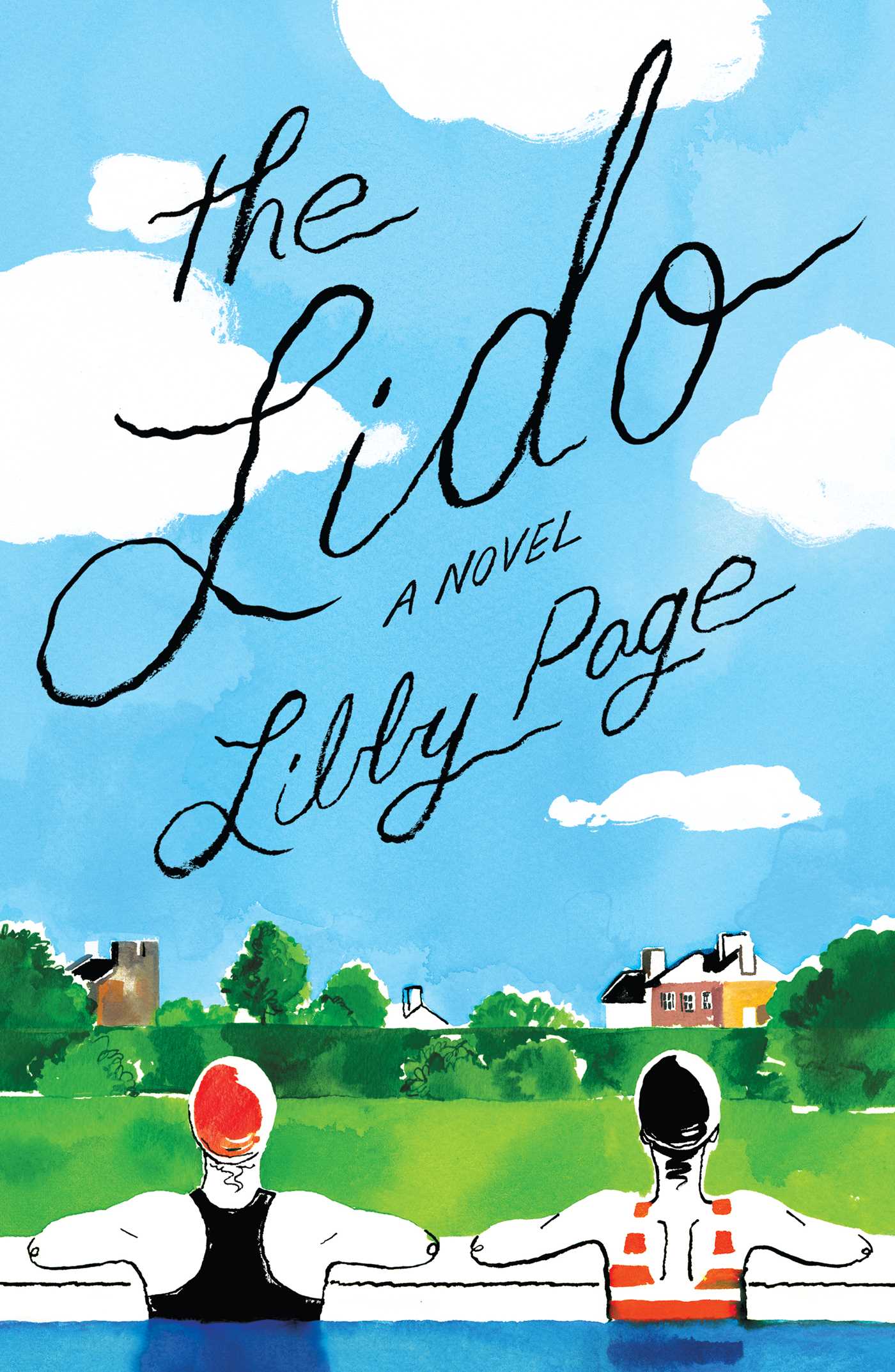
The Lido by Libby Page 


On Goodreads, the blurb for this novel says “Kate is a twenty-six-year-old riddled with anxiety and panic attacks who works for a local paper in Brixton, London, covering forgettably small stories. When she’s assigned to write about the closing of the local lido (an outdoor pool and recreation center), she meets Rosemary, an eighty-six-year-old widow who has swum at the lido daily since it opened its doors when she was a child. It was here Rosemary fell in love with her husband, George; here that she’s found communion during her marriage and since George’s death. The lido has been a cornerstone in nearly every part of Rosemary’s life.” This is a very good summary of this book, although it wasn’t evident to me that Rosemary had been swimming at the Lido “since it opened its doors” but that’s a minor point. 

Goodreads also calls this book “A tender, joyous debut novel about a cub reporter and her eighty-six-year-old subject—and the unlikely and life-changing friendship that develops between them.” While I can agree with almost all of this, there’s more. From my viewpoint, over and above this, Page also gives us portraits of two very different women, that also have much in common. Furthermore, Page also shows us how, through their serendipitous connection, these two women become more than they were before the two met; in other words, this is also a dual coming of age novel. 

Also, while this book will make you smile – and often, in fact – I’m not sure that “joyous” is the word that I would have chosen to apply to this novel. Yes, there are some very delightful parts of this story, but I felt that the overall atmosphere of the book was more a mixture of emotions, not all of them positive. For example, there’s a good deal of quiet resignation that runs throughout most of this story, which tends to color the mood of a majority of this story in a slightly grayish light (both because of and despite the famous English weather). This isn’t to say that the book is depressing, but rather that there’s a somewhat poignant undertone to most of the narrative. 

What brightens this book up the most is the quiet grace and subtle optimism that Page imbues in Rosemary, who we can both adore and admire. While Kate never fully succeeds in emulating this by the end of this novel, Page makes us believe that Kate may eventually achieve this, even if that’s not actually spelled out in the story. The ability of an author to do this – assist the readers in imagining what happens after the last page – is something I truly appreciate, and for a debut novel, this is quite an achievement, so kudos to Page for that. Moreover, Page did a really lovely job with building up the minor characters, and avoiding any obvious pitfalls when it came to the romantic interest for Kate. 

Together with this, Page also developed a very appealing plot, which allowed her to pull both Kate and Rosemary together along with all her other characters on a very interesting ride with the common goal of a community trying to save their beloved Lido. Between those parts of the story, Page also mingled in an excellent balance of the overview of Rosemary’s history with the Lido, which paralleled her lifelong love of her husband, George. 

As you can see, there is a whole lot to praise about this novel. However, there were a couple of things that didn’t sit completely right with me. One of these was the chapters in the book that described this fox that wanders the neighborhood. While I can understand why Page put these in the book, and I’m thankful she didn’t write them from the fox’s perspective, I felt that they didn’t really add all that much to the story. If it had been my novel, I probably would have left them out. The other thing that wasn’t quite right for me, were a couple of short chapters at the end of the novel, which gave the reader a touch too much information for my taste. Even so, Page is a very talented writer, with a lovely imagination and a true penchant for both character and plot development. That’s why I can recommend this book with a very strong four out of five stars. 


Simon & Schuster and Orion released "The Lido" by Libby Page on July 10, 2018. This book is available from Amazon, Barnes & Noble, Kobo eBooks, Kobo audio books, eBooks.com, iTunes (iBook or audiobook), The Book Depository (free worldwide delivery), new or used from Alibris or Better World Books (to support libraries and literacy, free worldwide delivery) as well as from an IndieBound store near you. I would like to thank the publishers for inviting me to read an ARC of this novel via NetGalley in exchange for a fair review.


reade more... Résuméabuiyad

Continuing to be

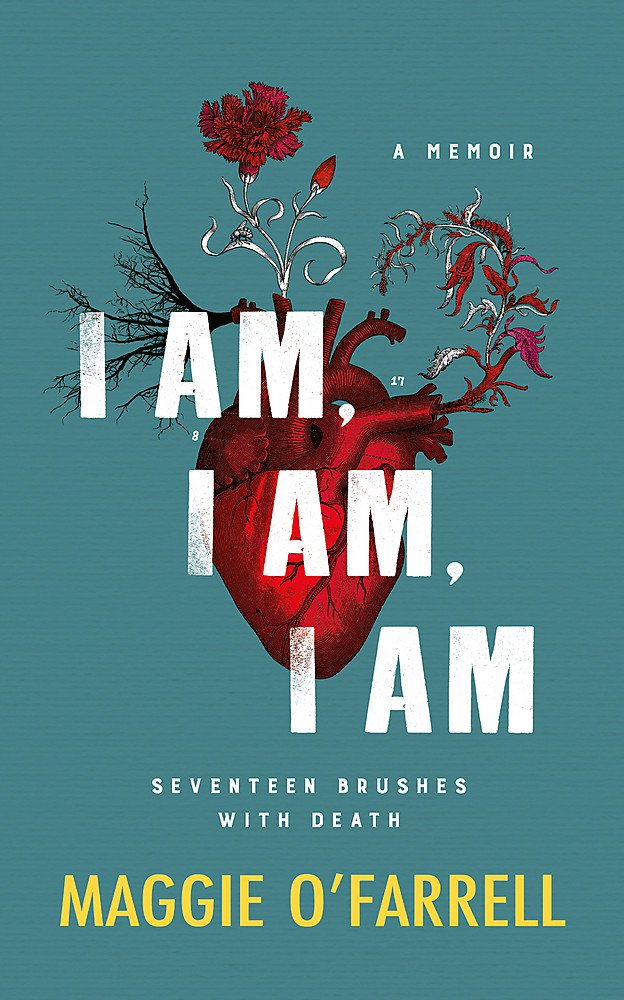
I am, I am, I am: Seventeen Brushes with Death by Maggie O’Farrell 


Goodreads calls this book a “memoire with a difference - the unputdownable story of an extraordinary woman's life in near-death experiences.” They also say it is “Shocking, electric, unforgettable,” and comment that “It is a book to make you question yourself. What would you do if your life was in danger, and what would you stand to lose?” Well, I couldn’t agree more with this summary, but to be honest, I think it is even more than that. 

My regular readers will know that I don’t usually read non-fiction, but this is Maggie O’Farrell, and well, I’ve been in love with her writing for years. Plus, the title indicated that this wasn’t an autobiography so much as a collection of experiences, which is far more to my taste. That is why the opportunity to get a glimpse into her life, even if it isn’t about the lighter side of her world, was irresistible to me, despite my worry that this might be heavy going. Thankfully, even though some (if not all) of these experiences were obviously traumatic in one way or another, somehow O’Farrell was able to portray them in a way that stuns us, yet never repulses us. 

However, don’t let this make you think this book is like the proverbial “train wreck” or “car crash;” one that you know is going to be morbid or gory but you can’t seem to tear yourself away, even if it feels like you should. This is because O’Farrell deftly side-steps anything that borders on the grisly through her writing style, which is so graceful, so lyrically poetic that even the most difficult scenes become a platform for her thoughtful, and deep sensitivity combined with her own an elevated sense of self-understanding. After writing that, it occurred to me that O’Farrell might disagree with that last part and argue that exact opposite is true. However, I can assure you it was highly evident to me, as if writing these stories was her way of writing a real-life coming-of-age story. 

What also struck me about this book was the artistry of how O’Farrell put all these stories together. These vignettes aren’t in chronological order, but rather in what feels like level of severity of the closeness of death. For example, in the first story, O’Farrell’s brush with death only becomes evident in hindsight, days after the incident occurred. Each subsequent story describes a situation where the nearness of the various dangers gets increasingly closer to ending O’Farrell’s life. The last story, however, takes a slightly different approach, and the life that was in danger described there, isn’t her own (I won’t say more, to avoid spoilers). If it sounds like an oxymoron that a review of a non-fiction memoir has spoilers, I can assure you that in this case, it certainly could! 

Finally, I have to say that there was also no small amount of creativity with the construction of the stories themselves. O’Farrell allows herself to flit between the incident in question and pieces from things that happened both prior to and long after the events, including present day observations and interpretations of the situations that O’Farrell could only make after having time for reflection. Add to this O’Farrell’s obviously deep emotional connections to all these stories, which bring forth a wellspring of prose that is at turns elegiac, whimsical, heartbreaking and uplifting, but never morbid or maudlin, and you have a true masterpiece. I cannot praise this book enough, and I would recommend this book to anyone who has the need for some honest inspiration in their lives (and these days, who doesn’t), so I’m giving it a full five stars. 


Tinder Press first released "I am, I am, I am: Seventeen Brushes with Death" by Maggie O’Farrell on August 22, 2017. This book is available from Amazon, Barnes & Noble, Kobo Books, Kobo audio books, eBooks.com, iTunes (iBook or audiobook), The Book Depository (free worldwide delivery), new or used from Alibris or Better World Books as well as from an IndieBound store near you.

My reviews of Maggie O'Farrell's novels can be found here:
After You'd Gone
My Lover's Lover
The Distance Between Us
The Vanishing Act of Esme Lennox
The Hand that First Held Mine
Instructions for a Heatwave
This Must be the Place


reade more... Résuméabuiyad